The Tudor Church
- 1535
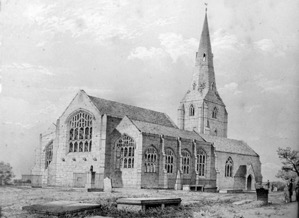 The east end of the church was entirely rebuilt in the Tudor period and a tradition has grown that the last Abbot of St Werburgh, Dr John Clarke, decided to make use of surplus funds from the Abbey’s treasury to prevent its sequestration by the King. The work is said to have been given added urgency following the closure of the smaller monasteries in 1535 and to have been brought to an abrupt end after the dissolution of the Abbey in 1540. This theory was put forward by the late nineteenth century antiquaries and sounds very convincing, but an earlier date must be preferred as the Church is known to have possessed a stained glass window dated ‘1523’. The Masons’ marks also show that the Tudor building was started in about 1520 and finished no later than 1530. Thus it may be that the families whose coats of arms were represented on the windows, the Lancelyns, the Mynshulls, and the Stanleys and Chauntrells, were the benefactors of the church, and perhaps competed with each other to build the three aisles. The earlier date brings the rebuilding within the Rectorship of John Brereton (1511-28) who was the Master Mason for Cheshire and Flint, and known for other churches which he built, such as that at Astbury. It seems that he was responsible, while the cost was met by the landowners, perhaps with some assistance from the Abbey. It is also possible that the plans were instigated by Brereton’s predecessor Nicholas Chauntrell (1507-11). He was a member of a family who owned land in Bebington and his parents were commemorated in the window of 1523. The work presumably came to an end in 1528 when John Brereton left Bebington.